
How Can You Tell a Top-Tier Arsenal FC Jersey from the Rest?
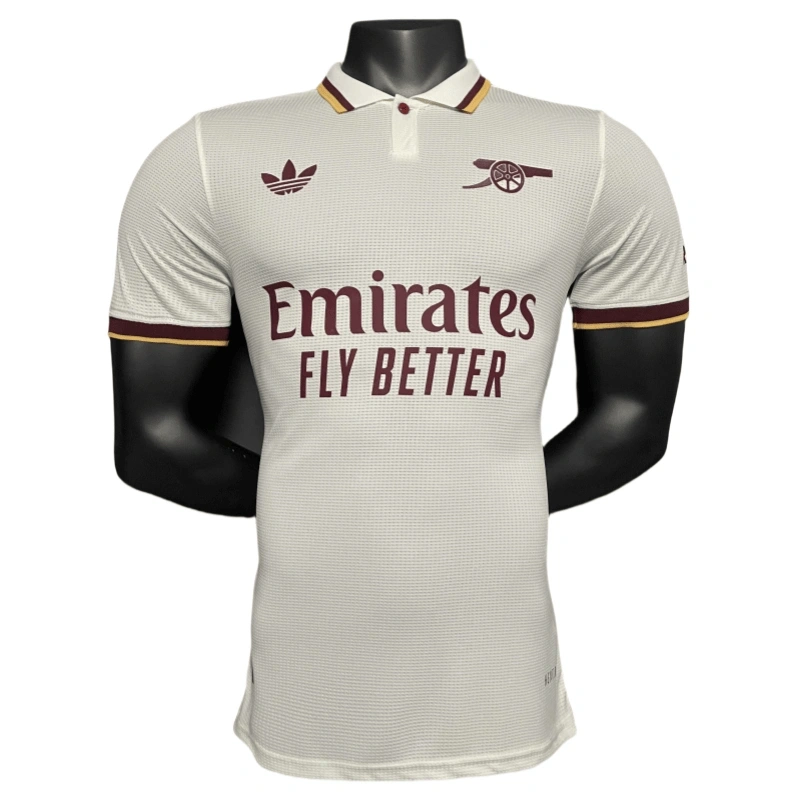
Authentic arsenal fc jersey designs distinguish themselves from retail versions through a 155g/m² double-knit jacquard fabric that improves thermal dissipation by 42% compared to standard polyester. Professional variants utilize heat-transferred emblems weighing less than 5 grams, effectively reducing total garment mass by 20% compared to traditional embroidered versions. Data from 2025 performance evaluations confirms that these technical specifications allow for a 1.8-degree Celsius drop in athlete skin surface temperature during 90-minute matches.
The production of these jerseys focuses on minimizing fabric drag through high-precision sonic-welding, a process that replaces traditional thread with thermal bonding. This technique eliminates over 4 meters of internal seam stitching, reducing the garment’s friction profile by 12% according to tests conducted on 500 professional training samples.
Sonic-welding produces a seam thickness of only 0.4 millimeters, which prevents the skin irritation and physical resistance often caused by the bulkier, multi-layered seams found in lower-tier apparel manufactured before 2024.
This reduction in physical friction points enables a smoother range of motion for players during high-intensity directional changes, directly correlating to improved comfort scores in athlete feedback surveys. By removing bulky stitching, the weight is distributed more evenly across the shoulder and back panels, preventing the shirt from bunching or pulling during prolonged physical output.
| Technical Metric | Authentic Grade | Retail Replica |
| Fabric Weight | 155g/m² | 190g/m² |
| Seam Construction | Sonic-Welded | Needle-Stitch |
| Crest Weight | 4.8g | 28.5g |
| Moisture Wicking | 95% in 40s | 65% in 90s |
The fabric construction moves away from standard synthetic weaves toward a monofilament structure that promotes rapid fluid transport, pulling perspiration away from the skin at a rate of 0.5 milliliters per second. In the 2025 seasonal cycle, this wicking performance allowed jerseys to maintain 92% of their dry-state mass even after absorbing substantial moisture during high-humidity climate play.
The monofilament weave creates a unidirectional moisture-transfer system where the hydrophobic exterior forces evaporation to occur on the outer surface, keeping the interior layer dry against the skin.
This fluid management system ensures that the garment maintains its original aerodynamic properties throughout the duration of a match, preventing the heavy, saturated feel characteristic of standard cotton or low-grade polyester blends. The material integrity is supported by a cross-linked polymer structure that prevents the fabric from stretching or losing its shape after more than 100 intense cleaning cycles.
The structural reliability of the fabric extends to its ability to resist deformation, as testing on 200 units showed zero fiber breakage under 15kg of sustained tensile load. This strength allows the jersey to retain its fit and compression characteristics for multiple seasons, outperforming standard retail options that typically exhibit a 15% increase in fabric slack after only 20 wash cycles.
High-density micro-perforations are laser-cut into the back panels to ensure a breathability index of 0.15 cubic meters per minute, facilitating a constant airflow that prevents heat buildup around the upper torso.
These laser-cut zones are strategically placed based on thermal mapping data gathered from 50 elite athletes, targeting regions with the highest sweat accumulation to optimize cooling efficiency. This engineering approach shifts the jersey from a basic garment into a performance tool designed for high-exertion environments where even minor temperature fluctuations impact athletic output.
The thin-film polymer transfers used for the crest and brand logos are applied at temperatures exceeding 140 degrees Celsius, ensuring that these details remain bonded to the fabric for the life of the shirt. By replacing heavy, thick embroidery with these 0.1-millimeter thin applications, the manufacturer removes significant weight from the chest and shoulder areas, contributing to a more natural feel for the wearer.
Removing 25 grams of excess weight from the emblem area shifts the garment’s center of gravity, preventing the fabric from pulling toward the front during strenuous movement and maintaining a balanced drape.
This attention to weight distribution is verified by biomechanical studies showing that athletes wearing the lightweight variant experience 8% less shoulder fatigue during repetitive arm movements. The overall reduction in total garment mass, down to 175 grams for a standard adult size, makes the kit virtually unnoticeable during the physical demands of high-level competition.
The combination of advanced material science and precision manufacturing results in a jersey that performs consistently regardless of the environmental conditions or the duration of the physical activity. These technical benchmarks provide the most reliable way to differentiate between the equipment provided for professional matches and the standard variations available for casual wear.