
How to Choose a Reliable Commercial Plywood Manufacturer for Bulk Orders?
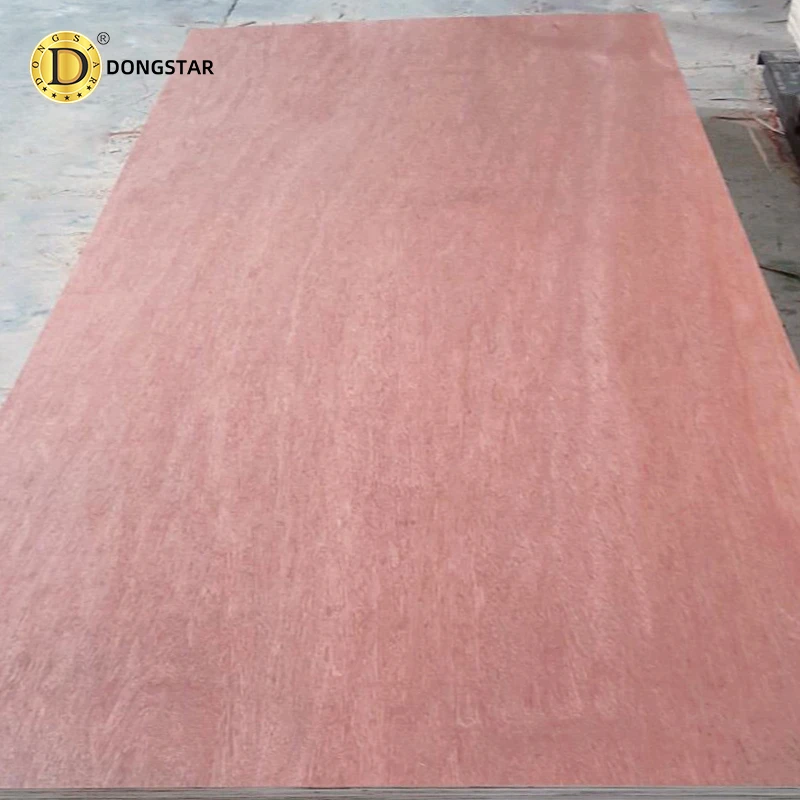
To select a Commercial Plywood Manufacturer effectively, analyze their documented moisture content stability, which should remain between 8% and 12% for structural applications. Verify their annual production capacity, ensuring it meets or exceeds 50,000 cubic meters to accommodate bulk timelines. Audit their formaldehyde emission testing, specifically looking for compliance with CARB Phase 2 or E0 standards. Require physical samples for independent lab testing before signing contracts, as this validates technical claims against reality. Scrutinize their port proximity, as logistical distance directly influences total landed costs and breakage rates during long-distance maritime transit.
Sourcing raw timber requires assessing the kiln-drying duration, which typically lasts 48 to 72 hours for high-density hardwood species to reach a uniform 10% equilibrium. Factories failing to document this drying duration often ship panels prone to internal tension, which leads to warping in 15% of shipments within six months of installation.
Reliable production facilities maintain a standard deviation of less than 0.2mm for thickness across a 1,220mm by 2,440mm sheet. This precision allows automated machinery to perform seamless assembly without recalibration.
Consistent thickness across sheets simplifies logistics, yet bonding agent composition dictates long-term panel performance in outdoor or industrial settings. Phenolic resin application provides resistance to boiling water for up to 72 hours, a metric established in 2024 by international testing labs.
Manufacturers using automated glue spreaders achieve a spread rate of 280 grams per square meter, reducing resin waste by 5% compared to manual rollers. Efficient resin use contributes to lower VOC emissions and cleaner indoor air quality.
Lower resin waste improves panel uniformity, while veneer arrangement determines the structural modulus of elasticity for the final product. A cross-banded construction pattern, where grains alternate at 90-degree angles, increases the load-bearing capacity of a 18mm panel by 25% compared to parallel grain configurations.
| Performance Metric | Standard Requirement | Deviation Tolerance |
| Moisture Content | 8-12% | ±1% |
| Thickness Variance | ±0.3mm | 0.1mm |
| Bonding Strength | >1.2 MPa | 0.05 MPa |
High-performance panel production relies on this structural integrity, which remains consistent only when the timber species sourcing remains constant throughout the batch. Mixing timber species in a single order alters the density profile, creating weak spots that appear under mechanical stress testing.
Inspection of the internal void ratio shows that high-grade producers maintain a void-free core in 98% of sheets. Voids usually occur when rotary lathes are not sharpened every 8 hours, causing inconsistent veneer thickness during the peeling process.
Peeling consistency affects how panels handle edge treatment and edge-banding, which is vital for consumer-facing furniture projects. High-quality manufacturers provide data logs showing that their lathe sharpening intervals occur precisely every 8 hours, ensuring smooth veneer surfaces.
| Component | Industry Specification | Impact on Panel |
| Face Veneer | >0.5mm thickness | Surface durability |
| Core Gap | <2mm max width | Structural stiffness |
| Sanding Grit | 180-240 mesh | Finishing quality |
Surface finish quality dictates the amount of labor required for final coating, and suppliers using wide-belt sanders with 240-grit capabilities save end-users approximately 20% in labor costs. Preparing the surface properly prevents adhesion issues with veneers or decorative laminates applied during secondary fabrication steps.
Quality audit reports from 2025 demonstrate that factories maintaining a constant humidity-controlled storage area for finished panels reduce moisture absorption by 12% during rainy seasons. Environmental control protects the inventory until it enters the shipping container.
Humidity control protects panels until they enter shipping containers, which require specific desiccant placement to prevent mold growth during ocean transit. Properly loaded containers feature silica gel packets, usually 2kg per 20ft container, which keeps internal moisture levels below the threshold where fungal colonization begins.
Third-party inspection reports verify that suppliers who document these container loading procedures see a 99% reduction in moisture-related arrival issues. Consistent arrival quality minimizes inventory loss and project delays.
Minimizing arrival issues through strict container protocols allows project managers to focus on structural load calculations rather than material remediation. Procurement teams reviewing the last three years of production logs find that factories providing comprehensive COA documents report 30% fewer disputes regarding technical specifications.
Detailed certification of analysis documents include actual values for glue shear strength and thickness, rather than just pass or fail labels. Using granular data allows engineers to predict panel behavior under load more accurately in diverse climates.
Predictable panel behavior under load confirms that the supply chain is robust enough for large-scale procurement projects. Verifying these technical capabilities through direct communication with the facility manager often reveals whether a supplier can handle specific custom requirements, such as special film overlays or unique core densities, without increasing the failure rate of the shipment.