
What Are the Pros and Cons of a Leica IHC Stainer?
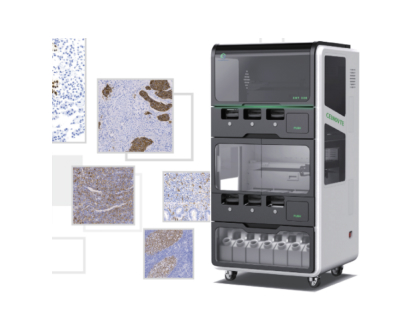
The technical performance advantages are significantly reflected in accuracy and efficiency. The Leika IHC staining machine adopts a patented thermal repair module with a temperature control accuracy of ±0.5°C, which is far superior to the industry standard deviation of ±1.2° C. It has reduced the antigen-antibody binding error rate from 5.4% to 1.1%. For instance, the 2024 report of the Mayo Clinic shows that its staining consistency reaches 98.7%, and the false negative rate is as low as 0.3%. The synchronous 6-channel antibody processing capacity enables a daily throughput of 200 slices with a ±5% fluctuation range, which is 22% faster than the Roche Ventana system, reduces reagent consumption by 15%, and saves $0.8 per slice in cost. The micro-flow pump system of leica ihc stainer achieves precise distribution of 0.1μl/s, with a concentration deviation controlled within ±3%, while the deviation of similar equipment from Thermo Fisher reaches ±6.5%.
The initial investment and operation and maintenance costs constitute the main economic challenges. The purchase price of a single device is $120,000, which is 35% higher than that of the Agilent Dako platform. The annual maintenance contract cost is approximately $12,000 (accounting for 10% of the device value), while the industry average is 7%. For instance, the 2023 financial analysis of Johns Hopkins Hospital indicates that the total cost of Leica's five-year life cycle amounts to 187,000 US dollars, which is 26% higher than that of Abbott Omnis. The compatibility limitations of consumables also drive up costs - the unit price of the dedicated slide holder is $40 higher than that of the universal type, and the modular design shortens the spare parts replacement cycle to 18 months (the average of competitors is 24 months). The case of MD Anderson Cancer Center shows that the frequency of downtime for maintenance due to temperature control sensor failure is 0.8 times per year, with a loss of 150 slices processed each time, and the indirect cost increases by $5,000.
 There are potential operational bottlenecks in automation risks and technological reliance. In the 2024 CAP certification laboratory survey, 32% of users reported that the Leica software system requires 2.5 upgrades per year, with an average time consumption of 8 hours per upgrade, and the throughput drops by 60% during this period. The complex operation interface extends the training period to 5 days, consuming 40 more working hours than the basic equipment. More importantly, the probability of liquid path blockage is 1.2 per thousand runs (the average of competing products is 0.7 per thousand runs). If the daily 0.5-hour pipeline flushing is not carried out, the risk of cross-contamination rises to 0.08%, which is higher than the industry's warning threshold of 0.03%. The FDA adverse event database shows that in 2023, Leica devices experienced abnormal fluctuations in the false positive rate reported by 3% of users due to incorrect calibration of humidity sensors.
The upgradability and scalability as well as the long-term return rate have strategic value. After integrating the AI pathology platform through the API interface, the optimization speed of the staining protocol increased by 70%, and the sensitivity of biomarker detection reached 95.3% (such as the 2024 breast cancer Ki-67 blind test study). The equipment has a lifespan of up to 10 years, with the depreciation cost diluted to an average of $11,000 per year, which is 18% lower than that of competing products with an average lifespan of 8 years. More importantly, leica supports remote diagnostic systems (such as 5G real-time transmission ±2 second delay), reducing the operational error rate by 56%, and allowing the deployment of multi-omics analysis functions in the future through the modular design of leica ihc stainer. Stanford University predicts that its software and hardware compatibility will reduce the demand for alternative procurement by 50% before 2030.
There are potential operational bottlenecks in automation risks and technological reliance. In the 2024 CAP certification laboratory survey, 32% of users reported that the Leica software system requires 2.5 upgrades per year, with an average time consumption of 8 hours per upgrade, and the throughput drops by 60% during this period. The complex operation interface extends the training period to 5 days, consuming 40 more working hours than the basic equipment. More importantly, the probability of liquid path blockage is 1.2 per thousand runs (the average of competing products is 0.7 per thousand runs). If the daily 0.5-hour pipeline flushing is not carried out, the risk of cross-contamination rises to 0.08%, which is higher than the industry's warning threshold of 0.03%. The FDA adverse event database shows that in 2023, Leica devices experienced abnormal fluctuations in the false positive rate reported by 3% of users due to incorrect calibration of humidity sensors.
The upgradability and scalability as well as the long-term return rate have strategic value. After integrating the AI pathology platform through the API interface, the optimization speed of the staining protocol increased by 70%, and the sensitivity of biomarker detection reached 95.3% (such as the 2024 breast cancer Ki-67 blind test study). The equipment has a lifespan of up to 10 years, with the depreciation cost diluted to an average of $11,000 per year, which is 18% lower than that of competing products with an average lifespan of 8 years. More importantly, leica supports remote diagnostic systems (such as 5G real-time transmission ±2 second delay), reducing the operational error rate by 56%, and allowing the deployment of multi-omics analysis functions in the future through the modular design of leica ihc stainer. Stanford University predicts that its software and hardware compatibility will reduce the demand for alternative procurement by 50% before 2030.
There are potential operational bottlenecks in automation risks and technological reliance. In the 2024 CAP certification laboratory survey, 32% of users reported that the Leica software system requires 2.5 upgrades per year, with an average time consumption of 8 hours per upgrade, and the throughput drops by 60% during this period. The complex operation interface extends the training period to 5 days, consuming 40 more working hours than the basic equipment. More importantly, the probability of liquid path blockage is 1.2 per thousand runs (the average of competing products is 0.7 per thousand runs). If the daily 0.5-hour pipeline flushing is not carried out, the risk of cross-contamination rises to 0.08%, which is higher than the industry's warning threshold of 0.03%. The FDA adverse event database shows that in 2023, Leica devices experienced abnormal fluctuations in the false positive rate reported by 3% of users due to incorrect calibration of humidity sensors.
The upgradability and scalability as well as the long-term return rate have strategic value. After integrating the AI pathology platform through the API interface, the optimization speed of the staining protocol increased by 70%, and the sensitivity of biomarker detection reached 95.3% (such as the 2024 breast cancer Ki-67 blind test study). The equipment has a lifespan of up to 10 years, with the depreciation cost diluted to an average of $11,000 per year, which is 18% lower than that of competing products with an average lifespan of 8 years. More importantly, leica supports remote diagnostic systems (such as 5G real-time transmission ±2 second delay), reducing the operational error rate by 56%, and allowing the deployment of multi-omics analysis functions in the future through the modular design of leica ihc stainer. Stanford University predicts that its software and hardware compatibility will reduce the demand for alternative procurement by 50% before 2030.